Weight Loss Supplement Brands: How to Read a Certificate of Analysis Without a Science Degree
Quick Answer: What Is a Certificate of Analysis?
A certificate of analysis is a laboratory document covering one production batch of a supplement. It lists every test that was run, the method used, the specification the batch had to meet, the measured result, and whether it passed. Read the header first — product name, lot number, date and the name of the laboratory — because if those do not match the bottle in your hand, nothing underneath them applies to you.
- Check first: product name, lot number, issue date and a named laboratory with an address.
- Then read: identity, potency, heavy metals, microbiology — and prefer numbers to the word "conforms".
- Ask for: the finished-product document for your lot, not a raw-ingredient one from the supplier.

What a certificate of analysis is, and who writes it
A certificate of analysis — usually shortened to COA — is a short technical document that accompanies a specific batch of material. It exists because manufacturing is not perfectly reproducible: two runs of the same formula, made in the same plant from different shipments of raw material, will not be chemically identical. Testing each batch and recording what came out is how a company knows it has made the thing it intended to make.
The layout is nearly always the same. A header identifies the product, the batch or lot number, the manufacture date and often an expiry. Beneath it sits a table with four columns: the test performed, the method used, the specification the batch was required to meet, and the result. A final column or row states whether the batch passed. At the foot there is usually a signature, a date of issue and the name of the laboratory or quality manager who approved it.
Who wrote it matters as much as what it says. Documents come from three places. An in-house quality laboratory at the manufacturing facility, which is normal practice and legitimate but is the manufacturer marking its own homework. A contract laboratory, which is a genuine third party. Or the raw ingredient supplier, testing a bulk powder before it was ever blended into a finished product. That third kind is the one most often sent to consumers who ask, and it is the least useful, because it describes an ingredient that has since been mixed, filled and stored.
The marker that separates a serious testing laboratory from an unaccredited one is ISO/IEC 17025 accreditation, the international standard for testing and calibration laboratories. It does not guarantee a result is favourable; it means an outside body has assessed the laboratory's competence and methods. If a document names a laboratory, the accreditation is worth two minutes of searching.
The four header checks that come before any number
Most of the value in this exercise is in the top inch of the page, and most people skip straight past it to the results table.
Product name. It should match your bottle exactly, including the form. A document for a powder blend does not describe a liquid or a capsule, even if the formula name is the same.
Lot number. This is the crucial one. Compare it, character by character, with the code stamped on your bottle or box. A COA for a different lot is a document about somebody else's batch. Manufacturers frequently publish one lot's paperwork indefinitely while producing dozens more.
Date. A document issued three years before the bottle you were sent was manufactured tells you the company tested once and has been circulating the same page ever since.
The laboratory. A named laboratory with a street address and a contact detail is a claim that can be checked. A document with a logo, no address and no signature is a design exercise. If the header is missing any of these four, stop — you have not been given evidence about your product.
How weight loss supplement brands differ once you ask for the paperwork
Asking for a batch document is the fastest way to sort a crowded shelf, because the request is trivially easy for a company that already has the paperwork and awkward for one that does not. Across weight loss supplement brands the responses fall into four fairly consistent tiers, and the tier is usually more informative than anything on the sales page.
At the top are the brands that publish batch documents openly, searchable by lot number, and will answer a follow-up question about the laboratory. This remains rare in the metabolic and weight-management category, which is worth knowing before you go looking — expect to be disappointed more often than not.
The second tier will email a finished-product COA for your specific batch when you ask, usually within a few days. That is a good outcome and a reasonable standard to hold a brand to.
The third tier sends something: an old document, a raw-material certificate from an ingredient supplier, or a generic page with the lot number blanked out. This is a partial answer, and how the company responds when you point out the mismatch is itself informative.
The fourth tier does not respond, or replies with reassurance and no document — "all our products are tested in a GMP certified facility" is the standard phrasing. A company selling a consumable that cannot produce a batch record for something it is shipping this week has told you how its quality system is resourced.
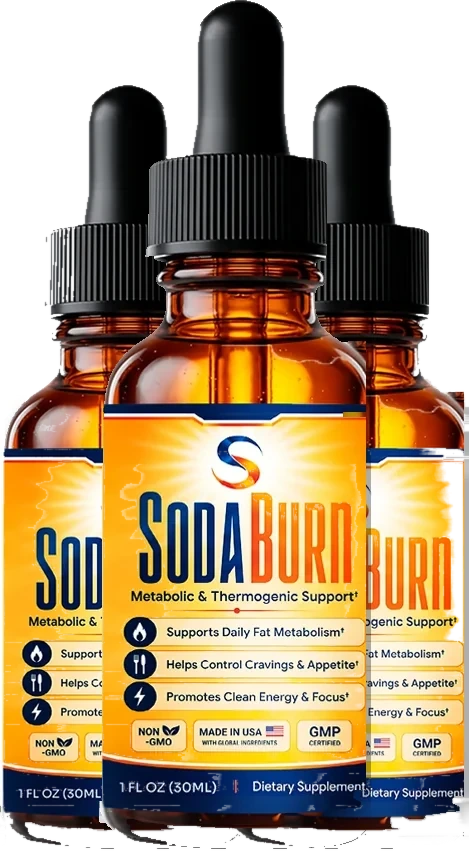
Start with the ingredient panel
Anyone asking whether fat burning supplements are worth it should read the amounts before the promises. The official page lists every ingredient, its amount and the current price, which is the information a batch document is meant to confirm.
See the Official Product PageWhat each section of the document is actually testing
The results table looks intimidating because of the abbreviations, but it covers a small number of questions asked repeatedly. The table below maps the sections you will see onto what each one is trying to establish.
| Section | What it establishes | Typical method shown | How much weight to give it |
|---|---|---|---|
| Identity | The material is the plant or compound it claims to be | HPLC, TLC, FTIR, or DNA testing for botanicals | High — substitution is a real problem in botanicals |
| Assay / potency | How much active or marker compound is present per serving | HPLC with a stated marker, e.g. percent catechins | High — this is the number the label promises |
| Heavy metals | Lead, arsenic, cadmium and mercury are within limits | ICP-MS against a stated specification | High — botanicals concentrate what the soil held |
| Microbiology | No Salmonella, E. coli, or excessive yeast, mould and total count | Plate counts and pathogen screens | High for liquids, powders and plant material |
| Pesticide residues | Agricultural chemicals below the permitted level | GC-MS or LC-MS panel | Moderate — often omitted entirely |
| Residual solvents | Extraction solvents removed to within limits | Headspace GC | Moderate, and relevant to concentrated extracts |
| Physical and organoleptic | Appearance, odour, moisture, particle size | Visual and gravimetric | Low for safety, useful for stability |
Identity and potency: the two numbers that decide everything
Identity testing answers a question most buyers never think to ask: is this actually the plant on the label? Botanical adulteration is a documented problem, partly because dried and powdered plant material is genuinely hard to tell apart by eye, and partly because a cheaper species can be substituted with little risk of detection. A chromatographic or DNA-based identity test is the check against that.
Potency, listed as an assay, is where the label meets reality. Look for a stated marker compound and a percentage or milligram figure — "green tea extract, 45 percent total catechins" says something specific, while "green tea extract" alone does not. Then compare that figure to the label and to the amounts used in published research. This is the single most useful calculation in the whole exercise: a botanical present at a tenth of the studied amount is unlikely to behave like the studies it is being sold on. Our look at green tea catechins and the weight-loss trial data gives a sense of how modest those effects are even at the doses that were actually tested.
Two conventions cause confusion. "Overage" is the deliberate practice of adding slightly more than the label states, so the product still meets the claim at the end of its shelf life; a result modestly above the label is normal, not an error. And a wide specification range — a permitted window of, say, ninety to one hundred and fifty percent of label claim — means the batch can legitimately vary a great deal while still passing.
Contaminants, detection limits and the word "conforms"
The contaminant sections are where a document either earns trust or quietly evades it. Heavy metals matter most for botanical products, because plants take up lead, arsenic, cadmium and mercury from soil and water, and an extract concentrates whatever was in the raw plant. The specification column should carry a number and a unit — parts per million or micrograms per serving — and ideally a reference to a recognised standard. This is not a theoretical worry: independent screening of 29 herbal supplements found inconsistency and contamination not only between brands but between bottles of the same product, which is exactly why the numbers on the document matter more than the name on the label.
Then there is the vaguest phrase in the genre. When the result column says "conforms", "complies" or "meets specification" instead of a measured value, you have been told the batch passed without being told by how much. A lead result sitting just under a limit and one sitting far below it both read as "conforms". Numbers are a disclosure; words are a summary of one.
"Not detected" needs the same scepticism. It means the analyte was below what that method could measure, and methods differ enormously in sensitivity. A well-written document prints the limit of detection or limit of quantification alongside, so the claim can be interpreted. Without it, "ND" is a statement about the instrument rather than the product.
Watch, too, for tests that are absent. A document listing only appearance, moisture and microbiology has quietly omitted the two sections that matter most for a botanical: potency and heavy metals. Omission is not a failed test, but it is not a passed one either.
A certificate of analysis tells you what was in one batch on one day. It does not tell you whether the formula works, and no laboratory result has ever made a weak ingredient effective.
The tricks a batch document can play
Most misleading documents are not forgeries. They are real papers used to answer a question they do not address, and there are perhaps six recurring moves worth recognising.
The raw material swap is the most common: you asked about the finished product and were sent the ingredient supplier's certificate for a bulk powder. It says nothing about the blend, the fill, or the finished bottle. The stale document is a real COA from a batch made years ago, still circulating. The redacted lot arrives with the batch number removed or blanked, which removes the only thing tying it to your purchase.
The partial panel presents four cheap tests as though they were the whole picture. The in-house-as-third-party move presents a document from the manufacturer's own laboratory as independent testing; look for whether the laboratory address matches the manufacturing address. And the screenshot — a cropped image of a table with no header, no signature and no laboratory name — is not a document at all, though it appears constantly in marketing.
None of these prove bad faith on its own. Small brands genuinely do not always understand the difference between an ingredient certificate and a finished-product one. But the pattern is diagnostic, and knowing who made your product is the prerequisite for asking any of it — our guide to verifying who actually makes your supplement covers finding the right party to ask.
What a certificate of analysis cannot tell you
This is the part most articles leave out, and it is the part that keeps the exercise honest. A COA is a quality document, not an efficacy document. It confirms that a batch contained what the label said and was free of listed contaminants. It says absolutely nothing about whether the formula produces any benefit, and a perfectly clean document can sit behind a product built on thin evidence. Those are separate questions and no laboratory result bridges them.
It is also a snapshot of one batch on one day, from one sample. Batch-to-batch variation is the reason the document exists in the first place, so a clean result for lot A is weak evidence about lot F. Degradation over shelf life is invisible too: testing usually happens at release, not after eighteen months in a warm warehouse.
Third, the document is only as trustworthy as the laboratory behind it, and consumers are poorly placed to judge that. An accredited contract laboratory and an unaccredited one produce papers that look broadly similar. Independent product certification programmes such as USP Verified or the NSF schemes exist precisely because verifying a laboratory yourself is difficult, and where such a certification is available it carries more weight than a document supplied by the seller.
Finally, none of this is medical guidance. A clean batch document does not make a product appropriate for you, does not account for your prescriptions, and does not mean the supplement is intended to diagnose, treat, cure or prevent any disease — it is not. Safety in your particular case is a different exercise, covered in our checklist on checking supplements against the medicines you already take. If you want to see how one metabolic formula lays out its ingredients and amounts for exactly this kind of scrutiny, the SodaBurn ingredient breakdown is a reasonable worked example to practise on.
Medical note: this article is general information about laboratory documentation, not medical advice. A batch test result says nothing about whether a supplement is suitable for you. Speak to a doctor or pharmacist before starting any supplement, especially if you are pregnant, nursing, taking prescription medication or managing a health condition.
Frequently asked questions
What is a certificate of analysis for a supplement?
It is a one or two page laboratory document covering a single production batch. It lists each test that was run, the method used, the specification the batch was supposed to meet, the result that was measured, and whether that result passed. Because it is tied to a lot number, it describes the specific bottle you were sent rather than the product in general.
How do I get a certificate of analysis for my bottle?
Email the brand's customer service, give the lot number printed on your bottle, and ask for the certificate of analysis for that batch. Ask specifically for the finished product document rather than a raw ingredient one, and ask which laboratory ran the testing. A company that cannot produce it for a batch it is currently selling has answered a different and more important question.
What should I look at first on a certificate of analysis?
The header, before any results. Check that the product name matches your bottle, that the lot number matches the code stamped on it, that the date is close to your batch, and that a named laboratory with an address issued it. If any of those four fail, the numbers underneath are describing something other than the product in your hand.
Does not detected mean an ingredient is completely absent?
No. Not detected means the amount was below the level that particular method could measure, which is called the limit of detection. A sensitive method and a crude one can both report not detected at very different real concentrations. A good document states the detection limit next to the result so the claim can be interpreted.
A final word on how to use all this. Nobody needs to become an analytical chemist to buy a supplement sensibly. The realistic goal is a five-minute filter: does the header match my bottle, are identity, potency and heavy metals present with actual numbers, and did a named laboratory sign it. Applied consistently, that filter removes a large share of the market without any expertise at all. Combine it with a hard look at the ingredient amounts and you are already doing more diligence than the sales page assumes — which is precisely the point when comparing the best fat burning supplement claims that all sound identical from the outside.
Scientific references
- NIH Office of Dietary Supplements — How to evaluate information about dietary supplements
- NIH ODS — Dietary supplements: what you need to know
- NIH NCCIH — Using dietary supplements wisely, including quality and testing
- Mayo Clinic — Herbal supplements: what to know before you buy
- Veatch-Blohm M.E. et al. — Screening for consistency and contamination within and between bottles of 29 herbal supplements, PLOS ONE (2021)
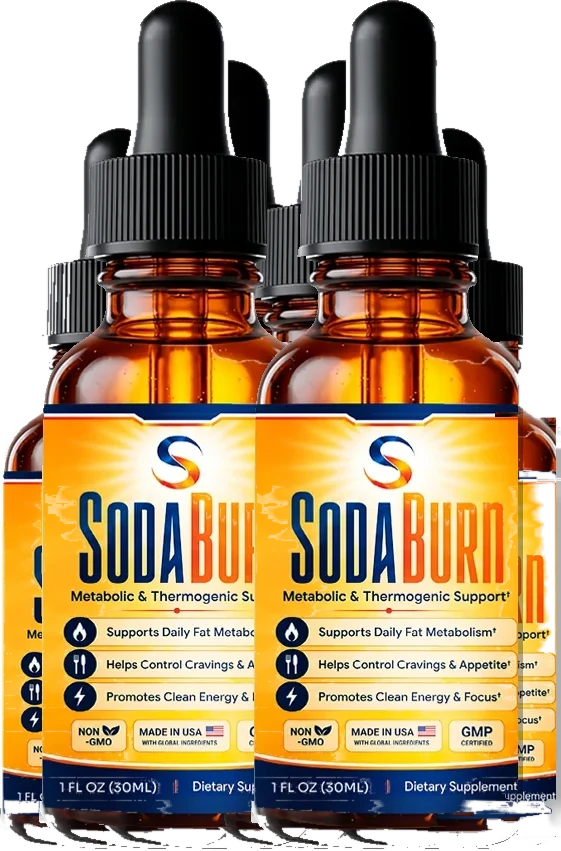
Every ingredient, every amount, in one place
SodaBurn is a once-daily liquid formula built around green tea and green coffee botanicals, L-carnitine, cayenne and chromium. The official page lists the full panel and amounts, so you have something concrete to check a batch document against.
View Ingredients & Availability