Green Tea EGCG and Weight Loss: What the Research Actually Shows
Quick Answer: Does Green Tea Help You Lose Weight?
To a small, real extent — and only alongside a calorie deficit. A Cochrane review of green tea preparations found a modest effect on weight and weight maintenance, on the order of a pound or two over months. The active compounds are catechins, chiefly EGCG, which appear to raise energy expenditure slightly, an effect amplified by the caffeine that comes with green tea. It is support at the margin, not a fat-burner, and it does nothing on its own.
- Strongest finding: a small but measurable effect on weight in pooled trials.
- Dose that matters: standardised catechin (EGCG) content, often paired with caffeine.
- Key caveat: it only works within a reduced-calorie diet — the deficit does the real work.

Why green tea, and why it is so often oversold
Green tea has been studied for weight and metabolism for decades, and the results are a good lesson in reading supplement marketing carefully. The effect is real: its catechins — particularly epigallocatechin gallate, or EGCG — can nudge energy expenditure and fat oxidation upward, especially when caffeine is present. But "real" and "large" are not the same thing. Pooled across trials, the weight difference is small, and it fades without a genuine calorie deficit behind it.
Part of the confusion is dose. Some trials used weak preparations or low catechin content and found nothing; others standardised for several hundred milligrams of catechins and found a small effect. This is exactly why the number worth checking on any label is the standardised catechin or EGCG content, not the total "green tea" weight.
How much weight, in actual numbers
This is the question the marketing never answers plainly, so here is the honest version. The largest independent synthesis is a Cochrane review of green tea preparations for weight loss and weight maintenance, which pooled eighteen randomised trials in overweight and obese adults. Its conclusion was that green tea produced a small, statistically detectable weight reduction that was not, in the reviewers' own assessment, clinically important. In plain terms: a pound or two over a few months, and the trials disagreed with each other about even that.
A separate meta-analysis in the American Journal of Clinical Nutrition looked specifically at whether the caffeine mattered, and found that catechins taken together with caffeine produced a small reduction in body weight, BMI and waist circumference, while catechins without caffeine did not. That single finding explains most of the contradictory headlines in this category. Trials using decaffeinated extracts tend to find nothing; trials using whole green tea extract with its caffeine intact tend to find a little something. If a product strips the caffeine out to make itself gentler, it has probably also stripped out the effect. That same caffeine question decides more than people expect when choosing between tea-based products, which is why our comparison of SodaBurn and Tea Burn treats stimulant load as its own column rather than a footnote.
What the evidence supports, and what it does not
| Claim | Where the evidence actually stands |
|---|---|
| EGCG raises energy expenditure | Supported, small. Measurable in metabolic-ward studies; roughly a rounding error against a day's food |
| Catechins plus caffeine beat catechins alone | Supported. Pooled trials find the effect on weight only when caffeine is present |
| Green tea causes meaningful weight loss on its own | Not supported. Cochrane found the pooled effect small and not clinically important |
| Higher EGCG doses give proportionally better results | Not supported. No clean dose-response above the studied range; liver risk rises instead |
| Green tea "detoxifies" or "melts" fat | Not a scientific claim. No trial has ever tested or shown this |
The caffeine partnership
Green tea rarely acts alone. The caffeine that naturally accompanies it has its own mild, well-documented effect on energy expenditure, and several studies suggest catechins and caffeine work better together than either does by itself. That is a genuine mechanism — but it also means part of what people feel is simply caffeine, and that the same caveats about caffeine sensitivity, sleep and blood pressure apply.
It also means the honest way to think about a green-tea thermogenic is as a mild stimulant with a small metabolic bonus attached, rather than as a fat burner that happens to contain caffeine. If you already drink coffee, the extract is adding to a total you should be counting, not starting from zero. Anyone who reacts badly to stimulants will get the downside of that partnership before they get the upside, which is why a gentler botanical route — the kind covered in our look at maca root for steady energy and metabolism support — is sometimes the more sensible starting point than pushing the catechin dose higher.
What the evidence supports across the wider category
| Ingredient | What the research supports |
|---|---|
| Green tea catechins (EGCG) | Small effect on weight and maintenance (Cochrane); dose-dependent |
| Caffeine | Mild, documented rise in energy expenditure; works with catechins |
| Chlorogenic acid (green coffee) | Mixed, mostly small trials on glucose handling |
| Capsaicin (cayenne) | Small thermogenic and appetite effects |
| Chromium | Weak, inconsistent evidence for weight loss |
Read down that column and a pattern appears: every entry is a variation on "small". That is not a criticism of any one ingredient, it is the shape of the whole category. The practical consequence is that green tea belongs alongside the levers that are not small — and by some distance the largest of those is appetite, which is why our guide to the natural appetite suppressants that actually work is the more useful companion read if your goal is a deficit you can hold. Green tea makes a good diet marginally better. Nothing in the table makes a bad one work.
Check the catechin number against the studies
The only way to judge a green-tea thermogenic is to read the standardised catechin content and compare it with the amounts used in the trials above. SodaBurn's official page lists every ingredient and its amount alongside current pricing and a 60-day money-back guarantee.
See the SodaBurn Ingredient AmountsHow to use green tea extract sensibly
If you have read this far and still want to use it — which is a perfectly reasonable decision for a cheap ingredient with a small real effect — four practical rules cover almost everything that goes wrong.
Take it with food, not on an empty stomach. The rare liver-injury reports associated with concentrated green tea extract cluster around high doses taken fasted, and taking the extract with a meal is the single easiest way to stay clear of that pattern. Dose earlier in the day. The caffeine that makes the extract work is also the caffeine that will cost you an hour of sleep, and sleep loss reliably increases appetite the next day — a trade that wipes out the ingredient's entire benefit several times over. Count your total caffeine. Extract plus coffee plus a pre-workout is a stack, and the jitters people blame on a supplement are usually arithmetic. Give it eight to twelve weeks, then judge honestly. An effect this small is invisible over a fortnight, and anything dramatic you notice in week one is the caffeine, not the catechins.
Four mistakes that waste the ingredient entirely
Buying on "green tea extract 500 mg" alone. That number is the weight of the extract, not the catechins in it. Two products carrying the same headline figure can differ several-fold in EGCG, and the standardisation percentage is the only figure that lets you compare them to a trial.
Choosing the decaffeinated version and expecting the same result. As the pooled trials show, that is the version where the weight effect largely disappears.
Stacking a thermogenic on top of an unchanged diet. A supplement that adds a small percentage to daily energy expenditure cannot outrun a surplus, and the disappointment that follows is almost always blamed on the product rather than the arrangement. Our broader survey of which diet supplements actually help fat loss sets out what a realistic contribution from any of these ingredients looks like.
Ignoring a symptom because a supplement is "natural". Nausea, unusual fatigue, dark urine, or yellowing of the eyes or skin after starting a concentrated extract are reasons to stop and speak to a clinician, not to push through. If that happens, our walkthrough of how to report a bad reaction to a supplement covers who to tell and in what order — the reporting system that tracks these cases only works because people file.
Where the evidence stops
Three honest limitations are worth stating plainly. First, a finished multi-ingredient supplement is not the same as any single studied dose — the ingredients can have evidence while the specific product has never been trialled. Always check a label's catechin milligrams against what the studies actually used. Second, the trials behind the pooled estimates are mostly short, mostly small, and mostly conducted in people already following a reduced-calorie diet, so they tell you about green tea as an addition to dieting and nothing at all about green tea instead of it. Third, none of this replaces a calorie deficit. Green tea's effect is small and conditional; if the diet is not there, the supplement has nothing to support. Anyone selling green tea extract as a way to lose weight without changing what you eat is overselling a modest ingredient.
Format changes none of that arithmetic, but it does change the dose you can verify and the caffeine you actually swallow, which is the practical question behind our comparison of a liquid dropper with a tea powder. Read the label of whichever you pick, because analyses of commercial green tea supplements keep finding wide variation between products.
Medical note: this article is general information, not medical advice. Speak to a healthcare professional before starting any supplement, especially if you are pregnant, nursing, caffeine-sensitive or taking medication. High-dose green tea extract has been linked in rare cases to liver issues.
Scientific references
- Jurgens T. et al. — Green tea for weight loss and weight maintenance, Cochrane Database of Systematic Reviews
- NIH Office of Dietary Supplements — Dietary Supplements for Weight Loss
- NIH NCCIH — Green Tea: What You Need To Know
- NIH ODS — Chromium fact sheet
- Jurgens T.M. et al. — Green tea for weight loss and weight maintenance in overweight or obese adults, Cochrane Database of Systematic Reviews (2012), PMID 23235664
- Phung O.J. et al. — Effect of green tea catechins with or without caffeine on anthropometric measures: a systematic review and meta-analysis, American Journal of Clinical Nutrition (2010)
Related reading
Frequently asked questions
Does green tea help you lose weight?
Modestly. A Cochrane review of green tea preparations found a small, statistically detectable effect on weight and weight maintenance - on the order of a pound or two over months, not a dramatic change. It is prevention-of-drift support at the margin, and it only shows up alongside a reduced-calorie diet.
How much EGCG is used in studies?
Trials vary widely, but many use several hundred milligrams of catechins per day, often standardised for EGCG, and frequently paired with caffeine because the two appear to work together. Because EGCG is the compound tied to the thermogenic effect, standardised catechin content is the number worth checking on any label.
Is green tea extract safe?
For most people in normal amounts, yes, but high-dose green tea extract has been linked in rare cases to liver problems, and it contains caffeine. If you are pregnant, caffeine-sensitive, or taking medication, speak to a clinician before using a concentrated extract.
Can a supplement replace diet and exercise?
No. Green tea catechins and other thermogenic ingredients produce only small effects, and only within a calorie deficit. No supplement causes meaningful fat loss on its own. Diet and activity do the work; a supplement can, at best, support the effort slightly.
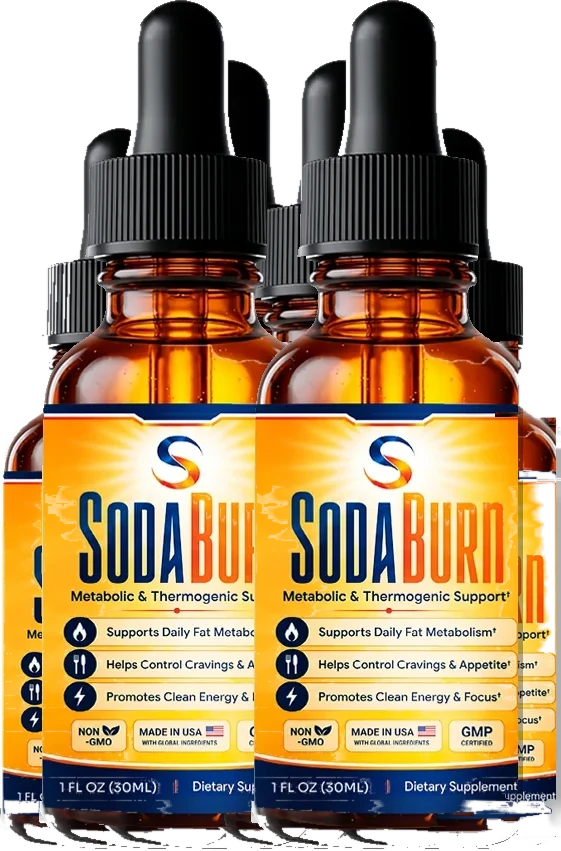
See how SodaBurn puts this together
Green tea, green coffee, L-carnitine, cayenne and chromium in one daily dropper — with every ingredient and its evidence laid out.
View SodaBurn on the Official Store