SodaBurn vs Tea Burn: How Liquid Drops and Tea Powder Actually Compare
Quick Answer: How Does SodaBurn Compare to Tea Burn?
SodaBurn and Tea Burn are different formats of the same idea: SodaBurn is a once-daily liquid taken with a dropper, while Tea Burn is marketed as a flavourless powder you stir into a cup of tea. Neither format has been shown to beat the other for weight loss, because no head-to-head trial exists. Judge them instead on published formula, caffeine load, guarantee length and whether each is sold only through its own official store.
- Format differs: sublingual drops versus a powder sachet mixed into a hot drink.
- Evidence overlaps: both lean on green tea catechin research, which shows small effects.
- Decide on: disclosed amounts, caffeine content, refund window and authorized seller.
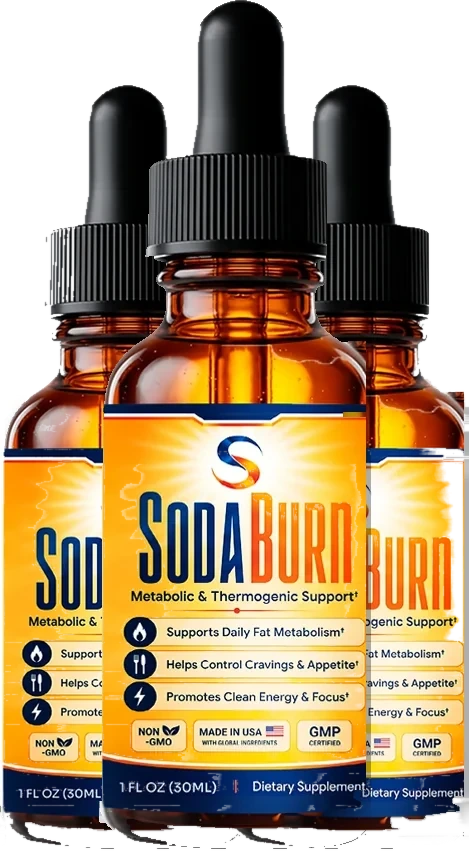
SodaBurn vs Tea Burn: what each product actually is
SodaBurn is a liquid weight-loss support supplement taken once a day from a dropper, and Tea Burn is marketed as a powdered supplement you stir into tea — so the first honest thing to say about this comparison is that the two are not the same kind of product at all. One is a concentrated liquid measured in drops; the other is a sachet of powder that dissolves into a drink you were probably making anyway. Everything else in this article follows from that difference, and from the fact that both sit in the same crowded 2026 category of tea-and-botanical weight-loss aids.
We should be plain about our position before we go further. This site covers SodaBurn, and that is exactly why the comparison below is built out of things you can verify for yourself rather than a verdict we hand you. We are not going to restate Tea Burn's current ingredient panel, dosages or price, because a rival's formula and terms change between batches and campaigns, and the only trustworthy version of those details is the one printed on the product you are actually looking at. What we can do is give you the columns to fill in, and be candid about SodaBurn's own answers.
The honesty note that belongs on both products, and on every competitor in this category: no drop and no tea powder is a weight-loss shortcut. The realistic ceiling for either is a modest assist alongside a reduced-calorie diet and regular movement, measured over a couple of months rather than a couple of weeks. If a page for either product promises dramatic loss without dietary change, it has told you something about its honesty before you have read a single ingredient.
Where is the Tea Burn official website, and how do you find the real one?
A supplement's official website is the domain printed on the physical label and in the packaging insert, and for any brand that is the only authoritative answer — which is why we do not publish a competitor's checkout link here and why you should be wary of any page that does. Searches for the Tea Burn official website arrive in a lot of shapes: people type the brand with a space, without a space, with a dot before the com, or with the com attached to the brand name. Those are all the same question, and the variety is precisely the problem, because near-miss spellings and lookalike domains are how copycat pages harvest traffic that was meant for the brand.
Here is the method that works for any supplement, Tea Burn and SodaBurn included. Start with the bottle or sachet in your hand and read the domain off the label rather than off a search result. If you do not have the product yet, look for the page that takes payment directly, states its own refund terms on the same domain, publishes a contact address and names the manufacturer or distributor — a genuine official store does all four. Treat marketplace listings with particular care: a third-party seller is who you will be arguing with over a refund, not the brand, and the brand's guarantee generally does not follow a bottle bought outside its own channel.
The deeper version of this check is working out who actually makes the product, which is rarely the brand whose name is on the front. Our guide to verifying who actually makes your supplement walks through reading the label statement and confirming facility registration, and it applies to Tea Burn, SodaBurn or anything else on the shelf. SodaBurn's own answer to this column is simple and checkable: it is sold only through its official store, which is where the 60-day money-back guarantee is honoured.
Powder in tea versus drops under the tongue: does the format change results?
There is no published head-to-head trial comparing a sublingual liquid supplement against a powdered one for weight loss, so any claim that one delivery format burns more fat than the other is marketing rather than evidence. This is worth stating flatly, because "absorbs better" is one of the most common unearned claims in the category. Sublingual delivery is genuinely useful for a handful of pharmaceutical compounds, but that does not automatically transfer to botanical extracts, and it has not been demonstrated for the ingredients these products are built on.
What format does reliably change is everything around the dose — and those practical differences matter more than most buyers expect, because the supplement you actually keep taking beats the one you abandon in week three.
| Practical factor | Liquid drops (SodaBurn) | Powder in tea (Tea Burn format) |
|---|---|---|
| What the routine requires | A dropper; no preparation, no hot water | A brewed drink to dissolve it into |
| Dose precision | Marked dropper, same volume each time | Pre-measured sachet, or a scoop you level yourself |
| Taste and tolerance | Taken directly; flavour is noticeable to some | Designed to disappear into the drink |
| Timing flexibility | Any time of day, easy to move earlier | Tied to when you have a hot drink |
| Absorption advantage | Not demonstrated for these ingredients | Not demonstrated for these ingredients |
Read that last row twice, because it is the row the marketing on both sides would rather you skipped. Format is a convenience and adherence question, not an efficacy question, and choosing on convenience is a perfectly rational thing to do — it is just not the same as choosing on evidence.

Compare the published amounts, not the format
SodaBurn's official page lists every ingredient, its amount and the current price, backed by a 60-day money-back guarantee — which gives you real numbers to hold Tea Burn or any other tea-based formula against.
See the SodaBurn Ingredient PanelWhat the green tea evidence supports, and what it does not
Both products draw on the same body of research — green tea and its catechin EGCG — and that research supports a small effect on body weight rather than a meaningful one. The most conservative reading comes from a Cochrane systematic review, which concluded that green tea preparations produced weight loss that was small and not statistically or clinically important in overweight and obese adults. A separate meta-analysis in the American Journal of Clinical Nutrition found that catechins taken together with caffeine produced a small reduction in body weight, BMI and waist circumference, while catechins without caffeine did not — which is a strong hint that a good part of the effect belongs to the caffeine rather than the tea compounds.
That distinction explains something people frequently misread in themselves. A systematic review and meta-analysis of tea and its bioactive compounds found that L-theanine with caffeine affects measures of alertness, mood and cognition in healthy people. Feeling sharper and steadier after a tea-based supplement is a real, documented effect — but it is an alertness effect, not evidence that fat is being lost, and mistaking the first for the second is the single most common self-deception in this category.
There is a further complication that applies to any powdered or extracted tea product. An analysis of commercial green tea supplements found substantial variation in catechin markers, total phenolics and caffeine between products, meaning the label and the contents do not always agree. The same problem has been documented in the adjacent green coffee category, where a quantitative assessment found evidence of mislabelling in commercial green coffee bean extract supplements, even though pooled trials of chlorogenic acid itself report only a modest average effect on body weight. Our full breakdown of the green tea and EGCG weight-loss evidence goes through these numbers in detail, and our overview of diet supplements that actually help fat loss puts them next to the other mechanisms worth caring about.
One caveat belongs on both products equally: none of the studies above were run on the finished SodaBurn or Tea Burn formula. They are ingredient studies, and treating them as trials of a branded product is the borrowed-science move our weight loss supplement buyer's guide warns about at length.

Caffeine and stimulant load: the axis most comparisons skip
Any weight-loss product built on tea carries caffeine, so the stimulant load is a real and checkable difference between candidates rather than a footnote. For most people this is unremarkable. For anyone caffeine-sensitive, it is the single most important line on the label, because jitters, a raised heart rate and disrupted sleep are the usual price of getting the amount or the timing wrong — and a tea-based powder taken in the afternoon is an easy way to make that mistake without noticing.
The useful comparison is not "which has less caffeine" in the abstract but "which discloses it, and does that total suit my day". Add the supplement's contribution to your coffee, your actual tea and anything else you drink, then judge the sum rather than the sachet. SodaBurn's green tea content contributes caffeine and that is disclosed on its label; your job with Tea Burn, or any rival, is to confirm the same figure at the source. A product that will not tell you how much caffeine is in a serving has failed this column no matter how it performs elsewhere.
Stimulants are also where supplements most often collide with prescriptions, and tea-derived products are no exception. If you take daily medication, work through our checklist for checking a supplement against your medicines before you start either product, and raise it with a pharmacist rather than a search engine.
Guarantees, pricing and where each product is sold
When two products rest on overlapping ingredient evidence and neither has been trialled as a finished formula, the buying terms become the tiebreaker — and unlike efficacy, the terms are fully verifiable before you pay. A guarantee is a company's own confidence written down. SodaBurn offers a 60-day money-back guarantee through its official store, a window long enough to run a realistic eight-to-twelve-week trial and ask for a refund if nothing changes. The equivalent move with Tea Burn is to find its stated window, read whether opened packs qualify, and note when the clock starts. A short or heavily conditional guarantee is a company telling you how many refunds it expects to pay.
Pricing deserves the same treatment, which is why we point you at the current official page rather than quoting figures that go stale. Compare on cost per day at the pack size you would realistically buy, not on the headline price of the largest bundle, and check whether either product enrols you in a subscription or rebill. SodaBurn is a one-time purchase through its official store with no subscription, and confirming the same for any competitor takes about a minute on its checkout page.
If you want the same five-column treatment applied to another rival in the liquid category, our SodaBurn vs Metabo Drops comparison runs the identical framework, and the columns transfer to whatever product you are weighing next.
So which one should you buy?
Buy the product whose format you will actually stick with and whose terms survive the checklist, and buy it only from its own official store — that is the honest end of a comparison where no head-to-head evidence exists. If you want a supplement that slots into an existing tea habit and you enjoy the ritual, a powder is a sensible choice. If you would rather not depend on brewing a drink, or you want to take it early in the day to keep caffeine away from your sleep, drops are the more flexible format. Neither preference is wrong, and neither is an efficacy argument.
SodaBurn's answers are on the record so you can hold Tea Burn to the same standard: a fully published formula, a disclosed caffeine contribution, a 60-day money-back guarantee, a single authorized store and no subscription. If a rival matches all five, you have a genuine choice between two credible products and either could be reasonable. What you should not do is let the louder page break the tie — countdown timers, dramatic testimonials and before-and-after images are theatre, not data. Expect a modest assist, give whichever you choose a fair eight-to-twelve-week trial inside a calorie deficit, and keep the guarantee as your safety net.
When two weight-loss products rest on the same ingredient research and neither has been trialled as a finished formula, the winner is not the one with the better delivery story. It is the one whose amounts, caffeine content, guarantee and seller you can all confirm before you pay.
Medical note: this article is a general consumer comparison, not medical advice, and does not claim that any product diagnoses, treats, cures or prevents disease. Caffeine-containing supplements are not suitable for everyone. Speak to a doctor or pharmacist before starting any weight-loss supplement, especially if you are pregnant, nursing, taking medication or managing a heart or blood pressure condition.
Related reading
Frequently asked questions
What is the difference between SodaBurn and Tea Burn?
The clearest difference is format. SodaBurn is a once-daily liquid taken from a dropper, while Tea Burn is marketed as a powder you stir into a cup of tea. Both sit in the same tea-and-botanical weight-loss category and both lean on green tea catechin research, so the useful comparison is not the delivery method but the verifiable specifics: whether every ingredient amount is published, how much caffeine a serving contains, how long the money-back guarantee runs, and whether the product is sold only through its own official store.
Where is the Tea Burn official website?
The official website for any supplement is the domain printed on the physical label and packaging insert, and that is the only authoritative source. We do not publish a competitor's checkout link, and you should be cautious of pages that do. Searches typed as tea burn com, teaburn com or tea burn.com are all the same question, and near-miss domains are exactly how copycat pages capture that traffic. Verify you are on a genuine official store by checking that it takes payment directly, states its own refund terms on the same domain, publishes a contact address and names the manufacturer or distributor.
Do liquid drops absorb better than a tea powder?
There is no published head-to-head trial comparing a sublingual liquid supplement against a powdered one for weight loss, so claims that one format absorbs better or burns more fat are marketing rather than evidence. Sublingual delivery is genuinely useful for some pharmaceutical compounds, but that has not been demonstrated for the botanical extracts these products are built on. What format does change is convenience, dose precision and timing flexibility, which affect whether you keep taking the product at all.
Does green tea actually cause weight loss?
The honest answer is that the effect is small. A Cochrane systematic review found that green tea preparations produced weight loss that was small and not statistically or clinically important in overweight and obese adults. A separate meta-analysis found that catechins combined with caffeine produced a small reduction in body weight, BMI and waist circumference, while catechins without caffeine did not, which suggests much of the effect belongs to the caffeine. Treat green tea as a marginal assist inside a calorie deficit, never as the mechanism doing the work.
Which should I choose between SodaBurn and Tea Burn?
Choose the format you will realistically stick with, then decide on terms you can verify. A powder suits someone with an existing tea habit; drops suit someone who does not want to depend on brewing a drink or who wants to take it early to protect their sleep. Neither preference is an efficacy argument, because no head-to-head evidence exists. Compare published ingredient amounts, disclosed caffeine content, guarantee length, authorized-seller policy and whether a subscription is involved, and buy only from the product's own official store.
Scientific references
- NIH ODS — Dietary supplements for weight loss: consumer fact sheet
- NIH NCCIH — Green tea: what you need to know
- MedlinePlus — Caffeine: safety and how much is too much
- U.S. FTC — Dietary supplements advertising guidance
- Jurgens T.M. et al. — Green tea for weight loss and weight maintenance in overweight or obese adults, Cochrane Database of Systematic Reviews (2012)
- Phung O.J. et al. — Effect of green tea catechins with or without caffeine on anthropometric measures: a systematic review and meta-analysis, American Journal of Clinical Nutrition (2010)
- Payne E.R. et al. — Effects of tea (Camellia sinensis) or its bioactive compounds L-theanine or L-theanine plus caffeine on cognition, sleep and mood in healthy participants: a systematic review and meta-analysis of randomised controlled trials, Nutrition Reviews (2025)
- Abourashed E.A. et al. — Content variation of catechin markers, total phenolics and caffeine in green tea dietary supplements, Journal of Dietary Supplements (2016)
- Otaif K.D. et al. — Chlorogenic acids and caffeine in commercial green coffee bean extract supplements: quantitative assessment and evidence of mislabelling, Food Additives & Contaminants Part A (2026)
- Kanchanasurakit S. et al. — Chlorogenic acid in green bean coffee on body weight: a systematic review and meta-analysis of randomised controlled trials, Systematic Reviews (2023)
See SodaBurn's answers to every column
Published formula and amounts, disclosed caffeine content, a 60-day money-back guarantee, one authorized store and no subscription. Read the ingredient panel and current pricing on the official page, then hold any tea-based rival to the same standard.
View SodaBurn on the Official Store