Weight Loss Supplement Buyer's Guide 2026
Quick Answer: How Do I Choose a Weight Loss Supplement?
To choose a weight loss supplement in 2026, ignore the marketing and run a checklist: name the manufacturer and its GMP-registered facility, read every ingredient amount on the label, confirm the science was done at doses the bottle actually delivers, and demand a real refund window. Anything that clears those and still promises only modest results is worth considering.
- Verify: a named maker, a GMP-registered facility, and a transparent ingredient panel with amounts.
- Distrust: borrowed science, proprietary blends, and rapid-loss promises with before-and-after drama.
- Expect: catalyst-level results over 8 to 12 weeks, backed by a genuine money-back guarantee.

How to judge any weight loss supplement before you spend a cent
The hardest part of buying a weight loss supplement in 2026 is not a shortage of options. It is that every option sounds identical. Open three product pages and you will read the same words — clinically studied, doctor formulated, breakthrough, thermogenic — laid over the same stock photography of a tape measure and a glass of water. The marketing has converged, which means the marketing can no longer tell the products apart. What still separates them is everything the sales page is least eager to show you: who makes it, what is actually in it, and whether the evidence describes the bottle or something adjacent to it.
This guide is not a ranking and it is not a list of the ten best pills. It is a portable method — a set of checks you can carry from one product page to the next so that you are grading every option by the same ruler instead of by whichever page had the more confident copywriter. We use Sodaburn as a worked example throughout, not because it is the only formula that passes, but because a real product makes the checklist concrete. The goal is that by the end you could apply these same tests to a competitor and reach your own verdict without us.
A quick note on honesty before we start. No supplement is a weight-loss shortcut, and anything sold as one should raise your guard rather than your hopes. The most a well-made metabolic formula can do is act as a small catalyst alongside a reduced-calorie diet and regular movement. Hold that expectation firmly, because half of the manipulation in this category works only on people who have been persuaded to expect a miracle.
The seven-point checklist a trustworthy formula passes
Everything below collapses into seven questions. A product that answers all seven cleanly is not guaranteed to work for you — nothing can guarantee that — but it has cleared the bar that removes most of the category. Run them in order and stop at the first hard failure.
| Check | What a good answer looks like | Red flag |
|---|---|---|
| 1. Who makes it | A named company you can look up, with an address and contact route | No manufacturer named anywhere on the site |
| 2. Where it is made | A GMP-registered, ideally FDA-registered facility | Vague "state of the art lab", no location |
| 3. Ingredient transparency | Every active listed with its amount per serving | Proprietary blend hiding the amounts |
| 4. Honest evidence | Studies cited as ingredient research, not product trials | Ingredient studies presented as proof the product works |
| 5. Realistic claims | Modest, catalyst-level language over 8 to 12 weeks | Rapid loss, "melts fat", numbers without a diet |
| 6. The guarantee | A real money-back window; Sodaburn offers 60 days | No refund, or a window too short to judge results |
| 7. Buying terms | Clear price, one official store, no forced subscription trap | Hidden rebills, fake scarcity timers, mystery sellers |
Notice how few of these are about the ingredients themselves. That is deliberate. Almost anyone can assemble a plausible ingredient list; far fewer can survive questions about who stands behind it and how honestly it is sold. The checklist is designed to test the company as much as the capsule.
Borrowed science is the most common trick in the whole category
If you learn only one idea from this guide, make it this one. Borrowed science is the practice of citing studies on individual ingredients as though they were trials of the finished product. A page will link to a respectable paper showing that green tea catechins produced a small metabolic effect at a particular dose, and let your eye slide from that citation to the bottle as if the two were the same claim. They are not. The study tested an isolated compound at a defined amount under controlled conditions. The bottle is a blend, made by a different company, often at a different dose, never trialled as a whole.
The reason this works is that the underlying research is usually genuine. You can follow the link and find a real journal, real authors, real numbers. Nothing is fabricated except the implied conclusion: that because an ingredient did something in a study, this product will do it in you. Two rival products can lean on the identical papers while sharing no finished-product evidence at all, which is exactly the trap our SodaBurn vs Tea Burn comparison works through in detail. Once you can see the move, you cannot unsee it, and it turns out to be almost everywhere. Our deeper look at the green tea and EGCG weight-loss evidence walks through exactly how modest those ingredient effects are even in the trials that went well — which is the context the citations quietly omit.
The defence is simple. When a product cites a study, ask two questions. Was this study run on the finished product, or on one ingredient? And does the amount in the bottle match the amount that was tested? If the answer to the first is "one ingredient" and you cannot even check the second because the amount is buried in a proprietary blend, then the science is decorative. It is there to borrow authority, not to inform you.
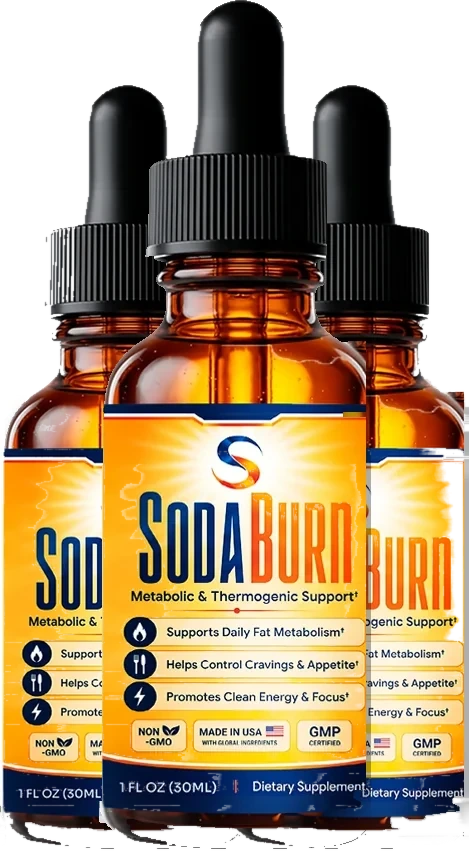
See a formula that shows its work
The fastest way to practise this checklist is on a product that has nothing to hide. Sodaburn lists every ingredient, its amount and the current price on one page, and backs it with a 60-day guarantee — so you can grade it against every test in this guide yourself.
See the Official Sodaburn PageDemand a verifiable manufacturer and a GMP-registered facility
The single question that clears the most clutter is also the plainest: who actually makes this? A surprising number of weight-loss brands never answer it. The product has a name, a logo and a checkout, but no company you could look up, no facility you could locate, no party you could contact if a bottle arrived damaged or a charge looked wrong. A consumable you swallow every day should not be more anonymous than the app you order dinner from.
A trustworthy product names its maker and the facility that produces it, and that facility should be GMP-registered — Good Manufacturing Practice, the framework that governs cleanliness, record-keeping and batch consistency. Better still is a facility that is also FDA-registered, though we will unpack in a moment exactly what that does and does not mean. The point is that these are checkable facts. A named company can be searched. A registered facility exists somewhere real. If you cannot even establish who to hold responsible, no ingredient list matters, because you have no assurance the bottle contains what the list describes. Our guide to verifying who actually makes your supplement is the step-by-step version of this check, and it is worth ten minutes before any purchase.
A real money-back guarantee is a confidence signal you can measure
Guarantees are where a company's private opinion of its own product leaks out. A brand that expects most buyers to be disappointed cannot afford a long, easy refund window, so it either offers none or hedges it with conditions designed to be failed — unopened bottles only, a fourteen-day clock, a restocking fee, a support line that does not answer. A brand that expects satisfied customers can afford to be generous, because it is betting that few refunds will be claimed.
This is why the guarantee is not a footnote; it is data. Look for a window long enough to actually judge results, which in this category means measured in weeks, not days, because a metabolic formula needs time to demonstrate anything. Sodaburn offers a 60-day money-back guarantee, which is long enough to run the product through a realistic trial and ask for your money back if it does nothing for you. Read the terms, confirm the refund applies even to opened bottles, and treat a short or conditional guarantee as the company telling you how confident it really is.
Expect a catalyst, not a miracle: what 8 to 12 weeks honestly looks like
Set your expectations correctly and you become almost impossible to manipulate. The honest truth about even a well-made weight loss supplement is that it is a catalyst operating at the margins. It may make a sensible diet slightly easier to stick to, nudge energy on a low-calorie day, or support the metabolic side of an effort you are already making. It does not act in place of that effort. Any page implying otherwise — dramatic drops in a fortnight, fat "melting" without a change in how you eat — is selling a fantasy, and the fantasy is the product.
Realistic evaluation runs over 8 to 12 weeks, not a week. Metabolic and appetite effects, where they exist, are gradual and modest, and they compound with the diet rather than replacing it. This is also why the 60-day guarantee window and the 8-to-12-week evaluation period fit together: the refund gives you long enough to run an honest trial. If a product's own marketing promises results faster than its guarantee gives you to test them, that mismatch is telling you which number the company actually believes. For a grounded view of which mechanisms genuinely earn their place in a formula, our look at diet supplements that actually help fat loss separates the handful of plausible levers from the marketing noise.
FDA-registered is not FDA-approved — and the difference matters
This distinction trips up even careful buyers, because the phrases sit one word apart and the marketing relies on you not looking closely. An FDA-registered facility means the manufacturing site is listed with the agency and falls under its manufacturing rules. That is a baseline, and a reasonable one to confirm. What it is not is an endorsement of the product. The FDA does not approve dietary supplements before they go on sale, and it does not test whether a given formula works. There is no such thing as an FDA-approved weight loss supplement of this kind, and any product claiming to be one is either confused or hoping you are.
So use the registration for what it is worth — evidence the facility is a real, regulated site — and give it no more weight than that. A registered facility can still produce a formula built on borrowed science and thin dosing. Registration answers "is this made somewhere legitimate", not "does this work". Keep the two questions separate and the marketing loses one of its favourite illusions.
The best weight loss supplement is not the one with the loudest promise. It is the one whose maker you can name, whose amounts you can read, and whose guarantee is long enough to prove the claim wrong.
Put the seven checks together and a pattern emerges. The products that survive are rarely the ones shouting the biggest numbers; they are the ones willing to be boring — a named company, a registered facility, printed amounts, honest language, a real refund. Sodaburn is built to pass that examination rather than to win a headline, which is exactly why it makes a useful yardstick. Apply the same tests to whatever else you are considering, and let the products that flinch under the questions eliminate themselves.
Medical note: this article is general consumer information about evaluating supplements, not medical advice. No supplement diagnoses, treats, cures or prevents any disease. Speak to a doctor or pharmacist before starting any weight loss supplement, especially if you are pregnant, nursing, taking prescription medication or managing a health condition.
Related reading
Frequently asked questions
How do I choose a weight loss supplement?
Work from a checklist rather than the sales page. Confirm you can name the manufacturer and its GMP-registered facility, that the label lists every ingredient with an amount rather than hiding behind a proprietary blend, that any cited research tested doses close to what the bottle actually delivers, and that a genuine money-back guarantee backs the purchase. If a product clears those checks and still makes only modest claims, it belongs to the small group worth trying.
What makes a weight loss supplement trustworthy?
Trust is built from things you can verify, not adjectives. A trustworthy weight loss supplement names a real company and facility, shows transparent ingredient amounts, cites evidence honestly instead of implying the finished product was trialled, promises catalyst-level rather than dramatic results, and offers a refund window long enough to actually judge the product. Sodaburn's 60-day guarantee and disclosed formula are examples of that standard in practice.
What is 'borrowed science' in supplements?
Borrowed science is when a brand cites studies on individual ingredients as if they were trials of the finished product. A paper showing green tea catechins had a small effect at a specific dose is real research, but it does not prove the supplement in the bottle produces the same result, especially if the amounts differ. The evidence is genuine; the way it is applied to the product is the misleading part.
Are FDA-registered supplements approved?
No. An FDA-registered facility simply means the manufacturing site is listed with the agency and subject to its rules, which is a baseline expectation rather than an endorsement. The FDA does not approve dietary supplements before sale and does not evaluate whether they work. Registration is worth confirming, but treating it as an approval or a guarantee of effectiveness misreads what the phrase means.
Scientific references
- NIH Office of Dietary Supplements — How to evaluate information about dietary supplements
- NIH ODS — Dietary supplements for weight loss: consumer fact sheet
- U.S. FDA — Questions and answers on dietary supplements
- U.S. FTC — Dietary supplements advertising guidance
- NIH NCCIH — Using dietary supplements wisely
- Phung O.J. et al. — Effect of green tea catechins with or without caffeine on anthropometric measures: a systematic review and meta-analysis, American Journal of Clinical Nutrition (2010)
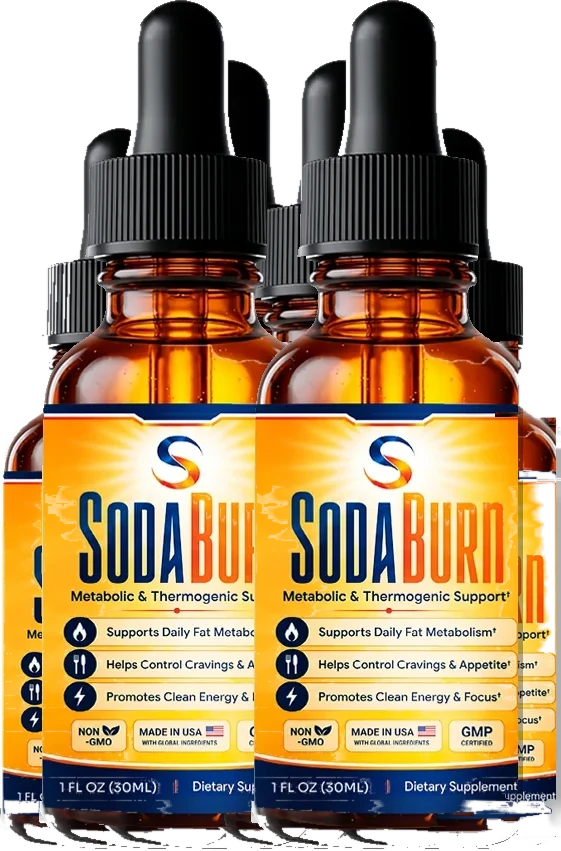
Grade Sodaburn against every check in this guide
A once-daily liquid formula built around green tea and green coffee botanicals, L-carnitine, cayenne and chromium — with every amount printed, a named GMP-registered facility, and a 60-day money-back guarantee. See the full panel and current pricing on the official page.
View Ingredients & Availability