Weight Loss Supplement Side Effects: Reporting a Bad Reaction and Who to Tell First
Quick Answer: Who Do You Tell About a Bad Supplement Reaction?
Stop taking the product, then tell three parties in this order: a clinician or pharmacist, the seller and the company named on the bottle, and the Food and Drug Administration through its MedWatch system. Keep the bottle, whatever is left inside it and the lot number, because a report without a batch number is far harder to act on. Filing is free, open to anyone, and takes about ten minutes with the label in front of you.
- Emergency first: call emergency services for breathing difficulty, chest pain, fainting, or swelling of the face, lips or throat.
- Keep, do not bin: the bottle, the remaining contents, the lot number, the expiry date and the receipt.
- File with: FDA MedWatch Form 3500B — the consumer version, no clinician required.

Why a bad reaction almost never gets reported
Prescription medicines sit inside a feedback loop. A patient tells a doctor, the doctor recognises the symptom as a known effect, and if it is unusual enough it travels upward into a surveillance database that other clinicians eventually read. Supplements sit outside almost all of that. The purchase happened online, no professional was involved at any point, and when something goes wrong there is no obvious person to tell.
So people do the natural thing: they stop taking the capsule, throw the bottle away, and carry on. That decision feels sensible and it is completely understandable. It is also the single reason the safety picture for this entire category stays as blurry as it is. Post-market surveillance of dietary supplements in the United States depends heavily on voluntary reports. The scale that surveillance is trying to capture is not trivial: an analysis of national injury-surveillance data estimated that supplement-related adverse events account for roughly 23,000 emergency department visits a year in the United States, a picture assembled entirely from reports somebody bothered to file. If nobody reports, the regulator learns nothing, and the next person searching for the same symptom finds an empty page instead of a warning.
There is a legal layer most buyers never hear about. Since federal legislation passed in 2006, companies that manufacture, pack or distribute dietary supplements in the United States have been required to forward serious adverse event reports they receive to the FDA. That obligation only functions if somebody tells the company in the first place. When you email a seller about a reaction, you are not merely complaining — you are triggering a reporting duty that exists specifically so that patterns become visible.
The other barrier is a quiet assumption that you need certainty. You do not. Nobody expects a member of the public to prove causation, and a report is not a lawsuit or an accusation. It is a data point. Regulators are looking for clusters, and clusters are built out of individually uncertain reports.
Before anything else, separate a side effect from an emergency
Reporting is a slow-lane activity. It belongs after the immediate safety question has been settled, never instead of it. A small number of symptoms mean you stop reading and seek urgent care straight away rather than filling in a form.
Call emergency services for difficulty breathing, tightness in the chest, swelling of the lips, tongue, face or throat, sudden widespread hives, fainting or collapse, or a racing heartbeat that will not settle. These are the signs of a severe allergic reaction or a significant cardiovascular event, and they need a person, not a website. The same applies to yellowing of the skin or the whites of the eyes, unusually dark urine, pale stools, or persistent pain under the right ribs — the pattern associated with liver injury. Concentrated botanical extracts have been linked in rare cases to liver problems, and the NIH maintains a dedicated database, LiverTox, for exactly this reason.
Everything gentler than that — the bloating, the loose stools, the poor sleep, the low-grade nausea — is where the reporting process starts. Stop the product first. Introducing a supplement and then continuing to take it "to see whether it settles" while symptoms build is how a mild problem becomes a serious one, and it also destroys the cleanest piece of information you will ever have: whether the symptom goes away when the product does.
Which weight loss supplement side effects are worth acting on
Not every unpleasant sensation in the first week is a safety signal. Weight loss supplement side effects broadly split into three groups, and knowing which group you are in tells you whether to wait, to stop, or to pick up the phone.
The first group is the settling-in effects. Prebiotic fibres such as inulin and psyllium routinely cause gas, bloating and looser stools in the first days as the gut adjusts to a larger fermentable load. Live bacterial products can do the same. These typically ease within a week or two, and lowering the dose or splitting it across the day usually helps. They are uncomfortable rather than dangerous.
The second group is the stimulant effects, and this is where metabolic and thermogenic formulas differ from ordinary digestive products. Green tea extract, green coffee and guarana all carry caffeine. Jitteriness, a racing pulse, disturbed sleep, anxiety and a headache on the days you skip a dose are caffeine effects, and they stack with whatever coffee or energy drinks you already have. This group is dose-dependent and reversible, but it is genuinely worth acting on if it is affecting sleep, because sleep loss makes the appetite regulation these products are marketed to support measurably harder.
The third group is the one that always warrants a professional conversation: rashes and hives, persistent vomiting, unexplained bruising or bleeding, chest symptoms, any sign of liver strain, and anything at all that starts within days of a new product and refuses to fade after two weeks off it. That last criterion is the most useful single test most people can apply at home.
A rough triage table for symptoms that appear after starting a new product
| Symptom pattern | Common triggers in these formulas | Typical timeframe | Reasonable next step |
|---|---|---|---|
| Gas, bloating, looser stools | Inulin, psyllium and other prebiotic fibres; live strains | First 3 to 14 days | Lower or split the dose; stop if it does not settle |
| Jitteriness, palpitations, poor sleep | Green tea extract, green coffee, guarana, added caffeine | Within hours of a dose | Cut total daily caffeine; move the dose earlier; stop if it persists |
| Nausea or stomach pain on an empty stomach | Concentrated botanical extracts, cayenne, high-dose minerals | Within an hour of a dose | Take with food; stop if pain is severe or ongoing |
| Rash, itching, hives, facial swelling | Any ingredient; also excipients and flavourings | Minutes to days | Stop immediately; urgent care if breathing or swallowing is affected |
| Yellow skin or eyes, dark urine, right-sided pain | Rare, linked to some high-dose botanical extracts | Weeks to months | Stop and seek medical assessment the same day |
| Unexpected bruising or bleeding | Ingredients affecting platelets, or interaction with anticoagulants | Any time | Stop and contact the prescribing clinician |
Read the full label before the first dose
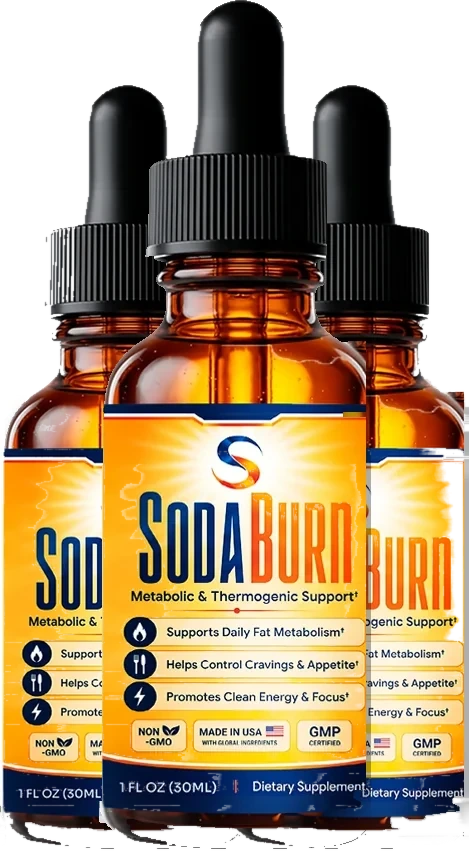
Anyone comparing the best weight loss supplement options for a metabolism-focused routine should start with the ingredient panel, not the headline. Knowing exactly what is in the bottle is what makes a side effect interpretable later.
See the Official Product PageWho to tell, and in what order
First, a clinician or pharmacist. A pharmacist is the most accessible healthcare professional in the country: no appointment, no fee, and they hold the interaction databases. Bring the bottle. Their job at this point is to work out whether what you experienced is a plausible effect of an ingredient, an interaction with something you already take, or a coincidence that happens to have landed in the same fortnight. Ask them to note it in your record, because a supplement you bought yourself does not otherwise appear anywhere in your medical history.
Second, the seller and the company on the label. Email rather than phone, so there is a written record with a timestamp. State the product name exactly as printed, the lot number, the dates you took it, what happened and when it started. Ask two direct questions: whether they have received other reports of the same effect for this batch, and whether they have forwarded the report to the FDA as their obligations require. You may not get a satisfying answer, but the question itself puts the event into their file.
Third, the FDA. Consumers can report directly, and this is the step most people do not realise is open to them. In the United States that is MedWatch. For an acute poisoning concern, Poison Control on 1-800-222-1222 is staffed around the clock and is the faster route. Outside the United States, the equivalent national scheme — the Yellow Card scheme in the United Kingdom, for example — performs the same function.
A fourth step is worth adding if you have one: tell whoever recommended it. If a trainer, a group chat or a family member pointed you at the product, they are almost certainly still recommending it to other people.
Filing with MedWatch: what the form actually asks
The FDA runs a consumer-facing version of its adverse event form, Form 3500B, written in plain language rather than clinical shorthand. You can complete it online at the MedWatch programme page, and it exists specifically so that members of the public can report without going through a professional.
The questions are straightforward. What happened, in your own words. When it started and when it stopped, if it stopped. What the outcome was — whether you went to hospital, missed work, or simply felt unwell. The exact product name and the company named on the bottle. The lot number and expiry date. Where you bought it and when. The dose you took, how often, and for how long. Everything else you were taking at the time, prescriptions and supplements alike. Your age and sex, and any relevant conditions.
Two things trip people up. The first is a belief that you must prove the product caused the problem. You do not, and the form does not ask you to; it asks what you suspect and what you observed. The second is the lot number, which is stamped rather than printed and is easy to miss — look on the base of the bottle, the crimp of the box, or near the expiry date. Without it, the FDA can log a product complaint but cannot connect it to a batch.
Expect no personal reply. That is not indifference; the system is built to aggregate rather than to adjudicate individual cases. Your report joins others, and it is the aggregate that eventually produces a safety communication or an inspection.
Keep the bottle, and keep it intact
The instinct after a bad experience is to get the thing out of the house. Resist it for a few weeks. Keep the bottle, the remaining contents, the outer packaging and the desiccant sachet if there was one. Keep the receipt or the order confirmation email, which establishes where and when it was purchased and by which seller — a detail that matters enormously when the same brand name is sold by a dozen different resellers of varying trustworthiness.
Photograph everything before it goes into a drawer: the front label, the supplement facts panel, the ingredient list, the lot number and expiry, and the company name and address. Photographs survive being lost and can be attached to an email in seconds. If you later need help interpreting what is on that panel, our guide to reading a certificate of analysis explains what the numbers are meant to be backed by, and how to ask a company for the batch document that corresponds to your specific lot.
The reason all of this matters more for supplements than for most consumer goods is contamination. The FDA maintains a public list of products marketed as dietary supplements that were found to contain undeclared pharmaceutical ingredients, and weight-loss products are one of the categories that appear on it repeatedly. Nobody can tell from the outside of a bottle whether it belongs in that group. A batch number and a physical sample are what make the question answerable at all.
A report is not an accusation, and you do not need to be right. Regulators are looking for clusters, and a cluster is nothing more than a stack of individually uncertain reports that happened to arrive.
What reporting cannot do
Be honest about the limits, because a process that oversells itself gets abandoned the first time it disappoints. Filing a report does not establish that the product caused your symptoms. Adverse event data is observational and uncontrolled; it records what happened after a product was taken, not what happened because of it. A single report proves association at best, and often not even that.
Nor does it produce a fast outcome. Dietary supplements in the United States are not approved before sale, and the regulator generally acts after the fact, using accumulated evidence to justify a warning letter, a safety communication or a recall. That accumulation takes time. You will almost certainly never learn what happened to your specific report, and nothing will visibly change in the weeks after you file it.
Reporting is not a compensation route either. It carries no financial remedy, no refund and no legal finding. If money is the issue, that is a separate conversation with the seller and with your payment provider, and it should be pursued in parallel rather than instead.
Most importantly, none of this replaces medical care. Nothing here diagnoses anything, no supplement mentioned is intended to diagnose, treat, cure or prevent any disease, and the entire article is general information for a healthy adult rather than advice about your situation. If symptoms are worsening, a form is not the right tool. And if you are weighing up whether to start something new at all, the safest sequence is the boring one: read the label, run it past a pharmacist alongside your medicines, start one product at a time, and keep notes. Our checklist on checking supplements against the medicines you already take covers that first conversation in detail, and our guide to verifying who actually makes your supplement shows how to find the company that has to answer for the batch.
Medical note: this article is general information, not medical advice. Seek urgent care for breathing difficulty, chest pain, fainting or swelling of the face or throat rather than filling in a form. Speak to a doctor or pharmacist before starting or stopping any supplement, especially if you are pregnant, nursing, taking prescription medication or managing a health condition.
Frequently asked questions
Who do I report a supplement side effect to?
Tell three parties, in this order. A clinician or pharmacist first, so the symptoms are assessed and written into your record. Then the seller and the company named on the bottle, because firms are legally obliged to pass serious adverse events to regulators. Then the Food and Drug Administration directly through MedWatch, which accepts reports from consumers without any clinician involvement.
Can I file an FDA report myself without a doctor?
Yes. MedWatch has a consumer form, Form 3500B, written in plain language for members of the public. You do not need a diagnosis, a clinician's signature or proof that the product caused the problem. A suspicion is enough, and the form takes roughly ten minutes if you have the bottle in front of you.
What information do I need before I report?
The exact product name as printed on the label, the company named on the bottle, the lot or batch number, the expiry date, where and when you bought it, the dose you took and the dates you took it, a description of what happened and when it started, and a list of every other medicine and supplement you were taking at the time.
Should I throw the supplement away after a bad reaction?
No. Stop taking it, but keep the bottle, whatever is left inside it and the packaging. The lot number is the only way a problem can be traced back to a specific production batch, and if the product is ever tested the remaining contents matter. Photograph the label as a backup and keep the receipt or order confirmation.
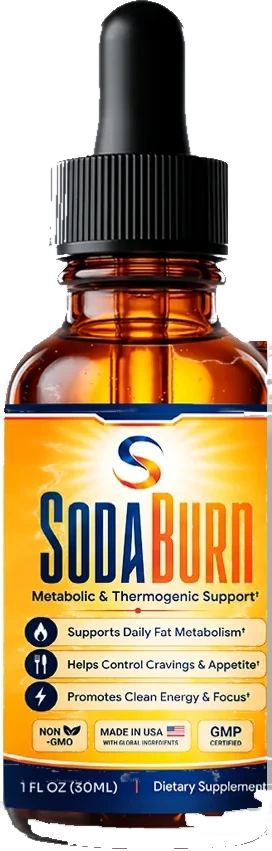
One last thought on choosing well in the first place. People generally start searching for the best weight loss supplement and stop reading the moment they find a persuasive page, which means the ingredient panel — the only part that predicts how a product will behave in your body — gets skipped. A formula that lists every ingredient and its amount is a formula whose side effects you can reason about. One that hides them behind a proprietary blend leaves you guessing, both before you buy and afterwards if something goes wrong. The SodaBurn ingredient breakdown is a reasonable worked example of what a fully disclosed panel looks like.
Scientific references
- NIH Office of Dietary Supplements — Dietary Supplements for Weight Loss, including safety and adverse effect sections
- NIH LiverTox — Clinical and research information on drug and herbal induced liver injury
- NIH NCCIH — Know the Science: evaluating health claims and research
- Mayo Clinic — Dietary supplements: what to know before you buy
- Geller A.I. et al. — Emergency department visits for adverse events related to dietary supplements, New England Journal of Medicine (2015)
Know what is in the bottle before you take it
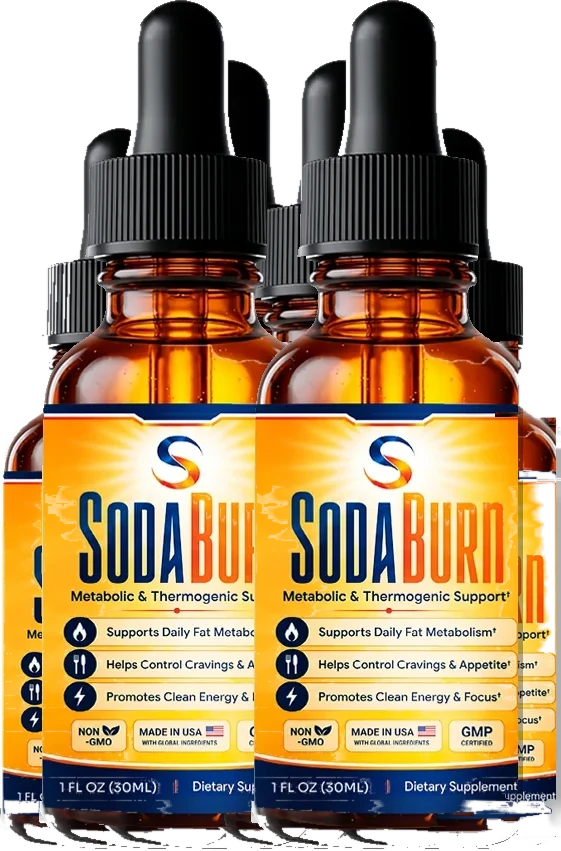
SodaBurn is a once-daily liquid formula built around green tea and green coffee botanicals, L-carnitine, cayenne and chromium. Every ingredient, amount and current price is listed on the official page, so you can take the panel to a pharmacist first.
View Ingredients & Availability