African Mango in SodaBurn: What the Clinical Trials Actually Measured
Quick Answer: How Much African Mango Is Actually in SodaBurn?
African Mango (Irvingia gabonensis) Seed Extract is the second of 21 ingredients printed inside SodaBurn's Proprietary Blend, which totals 15.47 mg per 1 ml serving. The label does not print an individual amount for African mango or for any of the other 20 blend ingredients — only the combined total. The main published clinical trial used 150 mg of a standardized extract twice daily (300 mg/day), a dose that alone is roughly 19 times larger than SodaBurn's entire 21-ingredient blend combined. Whatever fraction of 15.47 mg is African mango, it cannot be verified from the label, and there is no public reason to assume it approaches trial-level amounts.
- On the label: named, second in printed order, no individual amount disclosed.
- In the trials: 150 mg twice daily of a standardized extract (IGOB131), 300 mg/day total.
- The gap: unmeasurable from the label, but the full blend it sits in is a fraction of the trial dose.
Why African mango shows up in weight-loss formulas
Irvingia gabonensis, commonly called African mango or bush mango, is a tree native to West and Central Africa whose seeds have been used traditionally as a food thickener and folk remedy long before "African mango" became a supplement-aisle buzzword in the early 2010s. The interest in it as a weight-management ingredient traces to a specific standardized seed extract, commercially branded IGOB131, that was put through early laboratory and small human studies looking at fat cell formation (adipogenesis) and a handful of metabolic markers. That branded extract, not raw African mango seed powder in general, is what most of the published clinical evidence actually describes — a distinction that matters once we get to comparing doses.
SodaBurn's label lists "African Mango (Irvingia gabonensis) Seed Extract" as the second ingredient inside its Proprietary Blend, printed with a footnote mark indicating it is sourced from a concentrate with a 10:1 extract equivalent. That tells you the extract is concentrated relative to raw seed material, but it does not tell you how many milligrams of that extract end up in a single 1 ml dropperful. For that, we have to look at what the research actually used, and then be honest about what SodaBurn's label can and cannot confirm.
The trial that put African mango on the map
The most frequently cited human study is Ngondi et al., published in Lipids in Health and Disease in 2009. It was a randomized, double-blind, placebo-controlled trial in 102 healthy overweight or obese adults (BMI over 25). Participants received either 150 mg of IGOB131 or a matching placebo capsule, taken twice daily — 30 to 60 minutes before lunch and dinner — for 10 weeks. That works out to 300 mg of standardized extract per day. At baseline and at 4, 8 and 10 weeks, the researchers measured body weight, body fat, waist circumference, fasting lipids, blood glucose, C-reactive protein, adiponectin and leptin.
The IGOB131 group showed statistically significant improvements across body weight, body fat, waist circumference, total and LDL cholesterol, blood glucose, C-reactive protein, adiponectin and leptin compared with placebo. The authors described it as the first double-blind, randomized, placebo-controlled clinical trial of an Irvingia gabonensis extract and called for larger confirmatory studies. That last point is worth sitting with: even the researchers who ran the positive trial were asking for more and bigger studies before treating the result as settled.
Ngondi 2009 vs SodaBurn's blend, side by side
| Ngondi et al. 2009 trial | SodaBurn label | |
|---|---|---|
| Form | Standardized IGOB131 extract, capsule | Liquid extract inside a 21-ingredient blend |
| African mango dose | 150 mg twice daily (300 mg/day) | Not printed — part of a shared 15.47 mg total |
| Duration studied | 10 weeks | Not applicable; no finished-product trial exists |
| Other active ingredients present | None — African mango extract alone vs placebo | 20 other named ingredients plus chromium in the same 15.47 mg + 7 mcg |
The contrast is stark on its face: the entire SodaBurn Proprietary Blend, all 21 ingredients combined, weighs 15.47 mg per serving. The trial dose of African mango extract alone was 300 mg per day. Even setting aside the fact that we do not know what share of the 15.47 mg is African mango specifically, the blend as a whole is roughly 5% of the size of the single-ingredient dose used in the trial that generated most of the interest in this botanical. For more on how to read a total-blend figure like this against the ingredients printed inside it, see our companion piece on how to read a proprietary blend label, which walks through SodaBurn's full panel line by line.
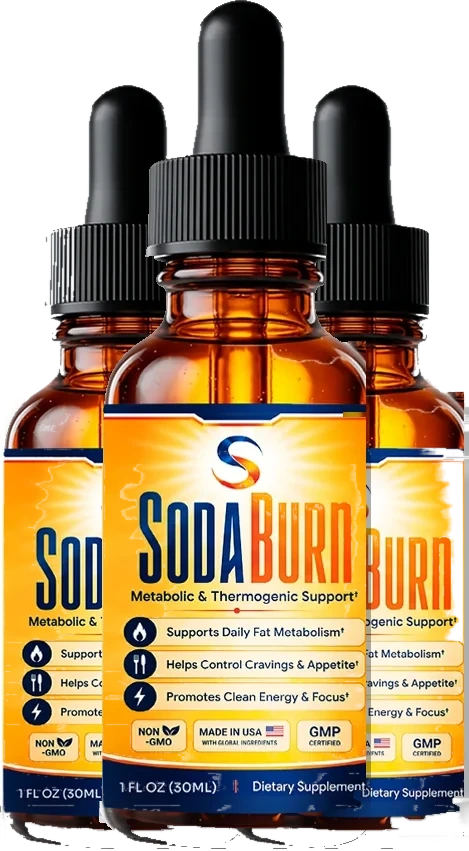
See the full SodaBurn label for yourself
Every ingredient on the printed Supplement Facts panel, in the order it appears, with nothing added and nothing assumed.
Order SodaBurnWhat the wider evidence base actually says
One positive trial rarely settles a question in nutrition science, and African mango is no exception. A 2013 systematic review published in the Journal of Dietary Supplements, Onakpoya, Davies, Posadzki and Ernst, searched for every randomized controlled trial evaluating Irvingia gabonensis for weight reduction in overweight or obese adults. They located three eligible RCTs. All three reported statistically significant reductions in body weight and waist circumference favoring African mango over placebo, and some positive effects on blood lipids were also suggested. But the reviewers flagged that every one of the three trials had flaws in how its methodology was reported — the kind of gaps that make it hard to rule out bias or confirm the study was run exactly as described. Reported adverse events across the trials included headache and sleep difficulty.
The review's conclusion is unusually direct for the supplement space: "Due to the paucity and poor reporting quality of the RCTs, the effect of I. gabonensis on body weight and related parameters are unproven. Therefore, I. gabonensis cannot be recommended as a weight loss aid." That is the state of the independent evidence as of the most recent systematic review we could locate — not a rejection of the earlier positive results, but a statement that the underlying trials are too few and too imperfectly reported to build a firm recommendation on. No newer systematic review superseding this one, and no trial of the finished SodaBurn formula itself, was found in this research.
The seller's "6 ingredients" claim, and why the label overrides it
It is worth addressing directly, because it changes how you should read every ingredient claim on this product's marketing pages: the seller's own website describes SodaBurn as a "6 natural ingredients" formula — chromium, African mango, green tea, guarana, maca and grape seed. That is not what the printed Supplement Facts panel shows. The label lists 21 named ingredients inside the Proprietary Blend (African mango among them), plus chromium listed separately, for 22 named items in total. Ginseng, eleuthero, astragalus, gymnema, forskolin, cayenne, grapefruit seed, raspberry ketones, a glycyrrhizin salt, GABA and five amino acids all appear on the label but do not appear in the "6 ingredients" marketing description.
Under U.S. labeling rules, the printed Supplement Facts panel is the legally controlling disclosure of what a product contains; marketing copy is not held to the same standard and can simplify, omit or overstate. When a company's own sales page and its own label disagree about how many ingredients are in the bottle, the label wins as a matter of what you can actually verify. This is not a minor rounding issue: 6 versus 21 is a fundamental disagreement about the product's composition, and it means any marketing text built around "6 ingredients" should be read as promotional simplification rather than a factual ingredient count.
Why the undisclosed amount matters more here than for most ingredients
Proprietary blends are legal, and SodaBurn's use of one is not unusual for this product category. But the practical consequence for a heavily researched ingredient like African mango is real: because the label does not say how many of the 15.47 mg are African mango extract, nobody outside the manufacturer can compare SodaBurn's actual dose against the 300 mg/day used in the Ngondi trial, or against any other published amount. It could be a meaningful fraction of the blend, or a token amount included mainly so the label can list it; the panel gives no way to tell those two scenarios apart. That uncertainty is exactly what a proprietary blend is designed to protect, and it is also exactly what a careful reader needs to know before assuming a supplement "contains" an ingredient at a dose that matches the research behind it.
Three objections worth taking seriously
"Even a small amount might still help." That is possible in principle, but it is not something the label lets you verify, and the systematic review's own conclusion was that the effect is "unproven" even at the higher trial doses used in the three RCTs reviewed. A smaller, undisclosed amount inside a 21-ingredient blend is not a case the published evidence speaks to directly.
"Combining 21 ingredients could create an effect none of them has alone." That is a real possibility in theory — botanical combinations sometimes behave differently than single ingredients — but it is also an unproven one here. No independent clinical trial of the finished SodaBurn formula was found in this research, so any claim about how the full 21-ingredient, 15.47 mg blend performs together is not backed by a study of that actual product.
"The company wouldn't put it on the label if it didn't work." Ingredients are commonly included on proprietary-blend labels because they are associated with a category of benefit — here, weight management — even at amounts too small to individually replicate the studies behind that association. Being named on a label is not the same as being dosed at a level that matches the research cited for it.
Safety notes from the published trials
The systematic review's safety data is limited but not silent: reported adverse events in the reviewed African mango trials included headache and sleep difficulty. That is a modest safety signal from a small number of studies, not a serious red flag, but it is worth knowing before combining African mango with the other stimulant-containing ingredients in the same blend, particularly guarana and green tea, which are covered in more detail in our guide to guarana, caffeine content and who should be careful. No data exists on how African mango behaves when combined with the other 20 ingredients in this specific blend, because no trial of the finished product has been conducted.
Medical note: this article is general information, not medical advice, and describes research on the African mango ingredient in isolation, not on SodaBurn as a finished product. If you are pregnant, nursing, under 18, or managing a medical condition or taking medication, the label advises speaking with a physician before use. Nothing here is a promise of results.
Frequently asked questions
How much African mango is in SodaBurn?
SodaBurn's label does not say. African Mango (Irvingia gabonensis) Seed Extract is the second of 21 ingredients printed inside a Proprietary Blend that totals 15.47 mg per 1 ml serving. Only that combined total is disclosed; none of the 21 individual amounts, including African mango's, are printed anywhere on the label.
What dose of African mango did the clinical trials use?
The main published trial (Ngondi et al., 2009) used 150 mg of a standardized extract called IGOB131, taken twice daily before meals, for a total of 300 mg per day over 10 weeks. That single ingredient's daily trial dose is roughly 19 times larger than SodaBurn's entire 15.47 mg blend of 21 ingredients combined.
Is African mango proven to cause weight loss?
Not conclusively. A 2013 systematic review of the randomized controlled trials found only three eligible studies, all with reporting flaws, and concluded the effect on body weight is unproven and that Irvingia gabonensis cannot be recommended as a weight-loss aid on the current evidence. Larger, better-reported trials would be needed to settle the question.
Does SodaBurn really only have 6 ingredients?
No. The seller's own marketing copy describes a 6-ingredient formula (chromium, African mango, green tea, guarana, maca and grape seed), but the printed Supplement Facts panel lists 21 named ingredients inside the Proprietary Blend plus chromium separately, 22 named items in total. The label is the legal source of truth, and it directly contradicts the six-ingredient marketing claim.
Scientific references
- Ngondi JL, Etoundi BC, Nyangono CB, Mbofung CM, Oben JE — IGOB131, a novel seed extract of the West African plant Irvingia gabonensis, significantly reduces body weight and improves metabolic parameters in overweight humans in a randomized double-blind placebo controlled investigation, Lipids in Health and Disease (2009)
- Onakpoya I, Davies L, Posadzki P, Ernst E — The efficacy of Irvingia gabonensis supplementation in the management of overweight and obesity: a systematic review of randomized controlled trials, Journal of Dietary Supplements (2013)
- Mah E, Chen O, Liska DJ, Blumberg JB — Dietary Supplements for Weight Management: A Narrative Review of Safety and Metabolic Health Benefits, Nutrients (2022)
- NIH Office of Dietary Supplements — Dietary Supplements for Weight Loss
Related reading
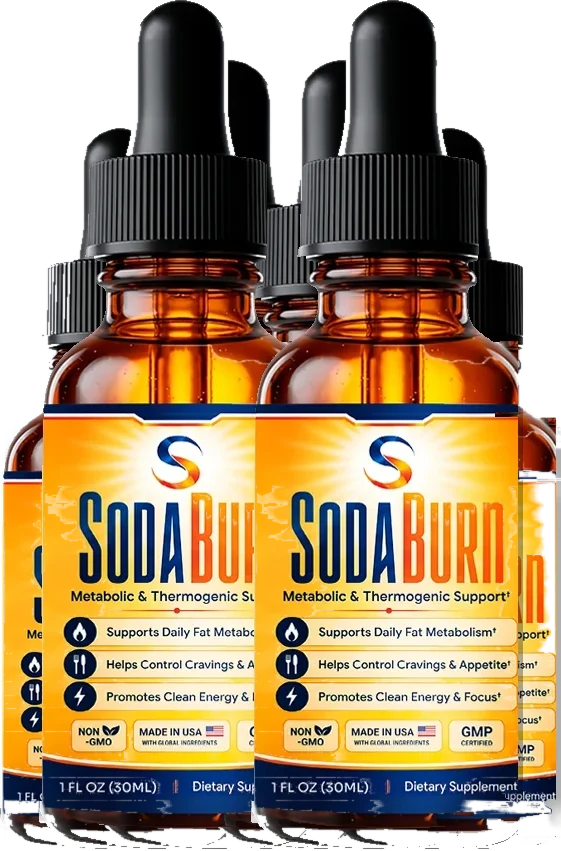
Read the label before you decide
SodaBurn's full 21-ingredient blend, printed order and all, is on the official product page — judge it against the research yourself.
Order SodaBurn